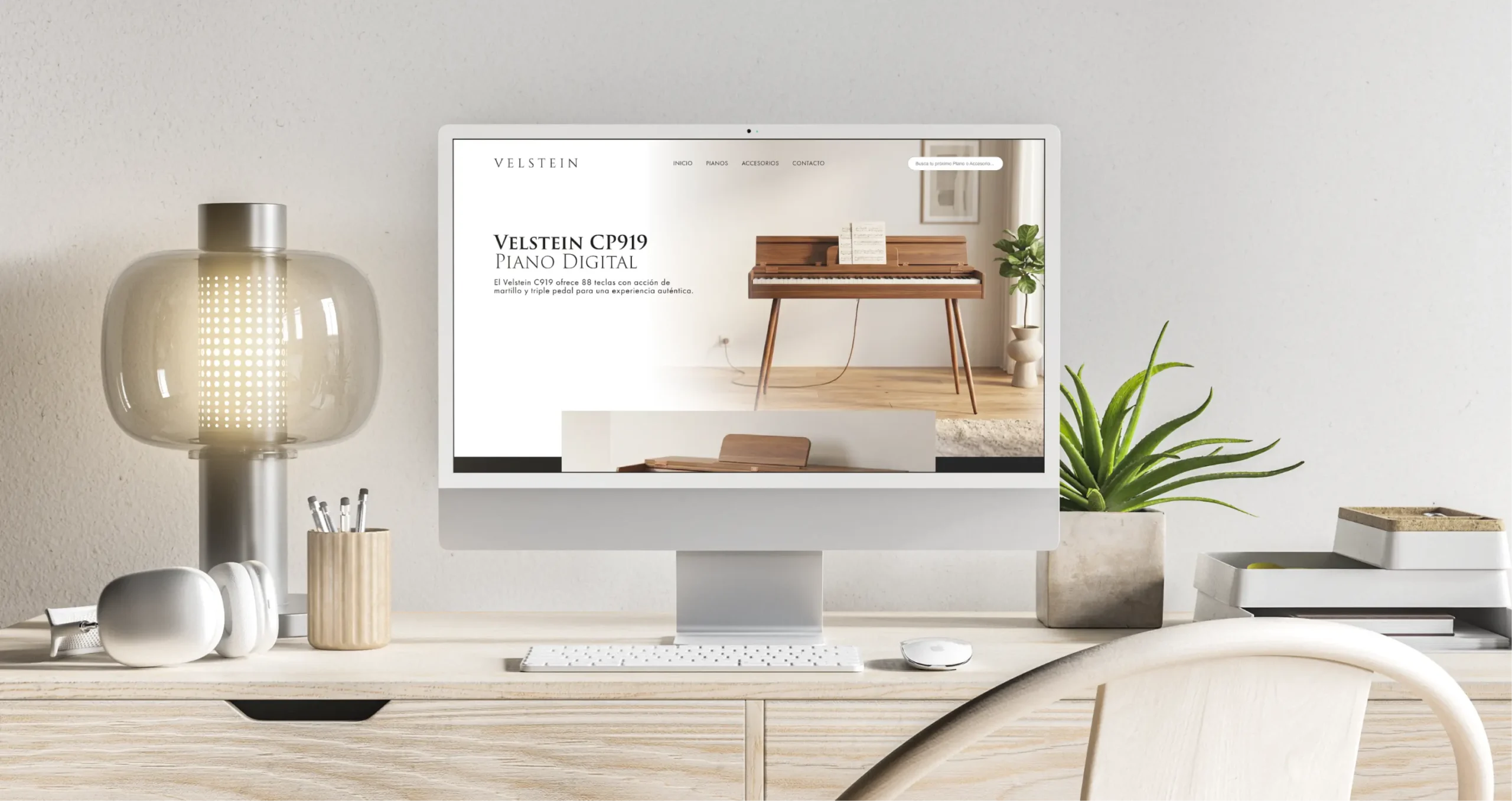
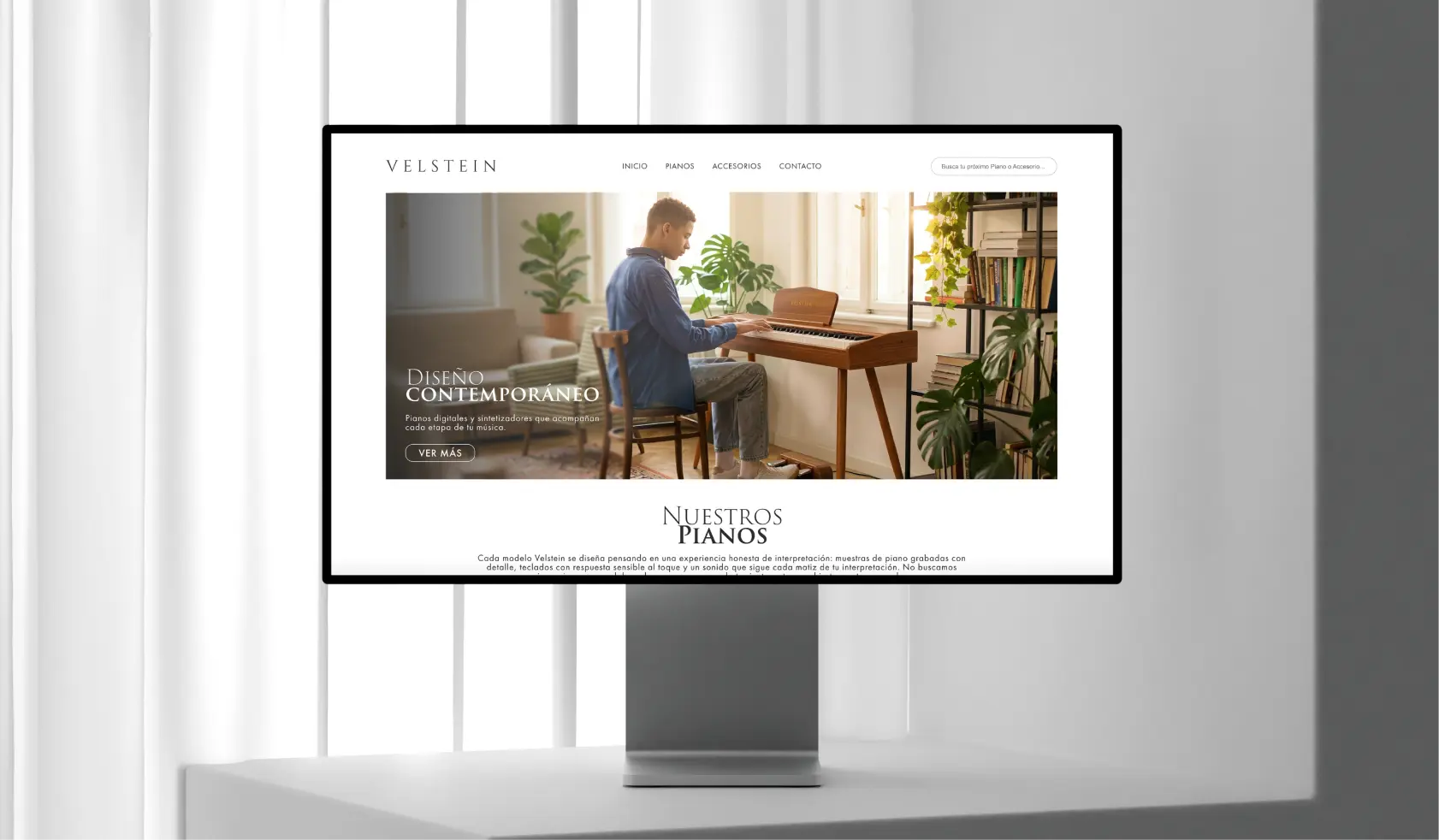
The piano at home,
not in a catalog.
I used AI to produce the lifestyle images: each model in a living room, a music room or next to a window with plants. This let the brand show its design in real spaces without a photo shoot, and the user doesn't see a product: they imagine playing it at home.
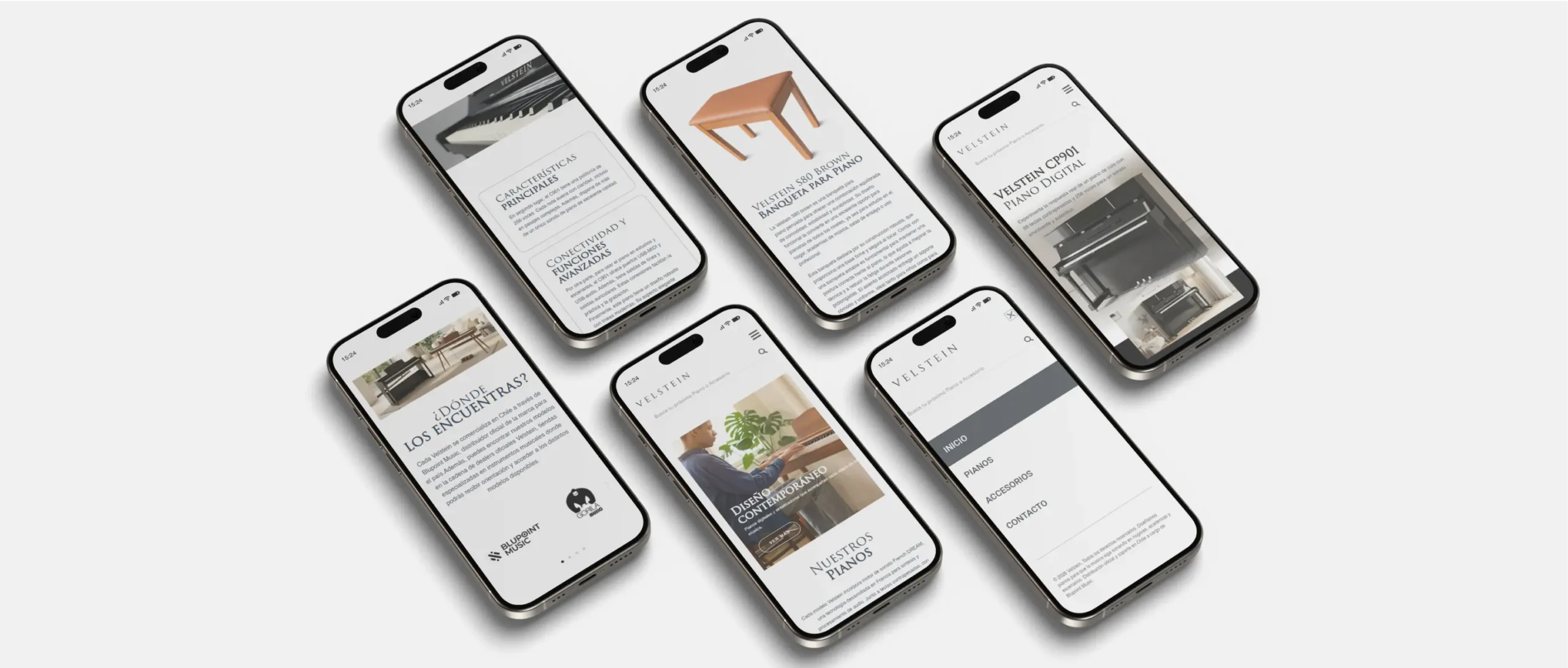
A new brand in a market where people buy on trust.
With a clear proposition: digital pianos with contemporary design and French sound technology. The challenge was that nobody buys a piano without knowing the brand, and the sale doesn't happen online but in specialized stores.
1
Introducing a brand the public didn't know yet. The website had to convey quality before anyone played the instrument.
2
Show design, not just specs. Velstein's differentiator is how the piano looks in a real space, not just its 88 keys.
3
Connect the website with in-store sales. With no online store, every visit had to end at a retailer.
Decisions
1
The piano at home, not in a catalog. The hero and main images show each model in real settings: a living room, a music room, a shelf with plants. The user doesn't see a product: they imagine playing it at home.
2
Producing the images with AI. I generated the lifestyle photos of each model with AI. This made it possible to show the full line in real spaces without relying on a photo shoot, and to keep the same style across all images: natural light, wood, plants and warm tones, consistent with a contemporary design brand.
3
Explain the technology in plain language. The French DREAM sound engine and the hammer action are explained through the experience (“so that when you sit down to play, the instrument responds”) rather than as a spec sheet.
4
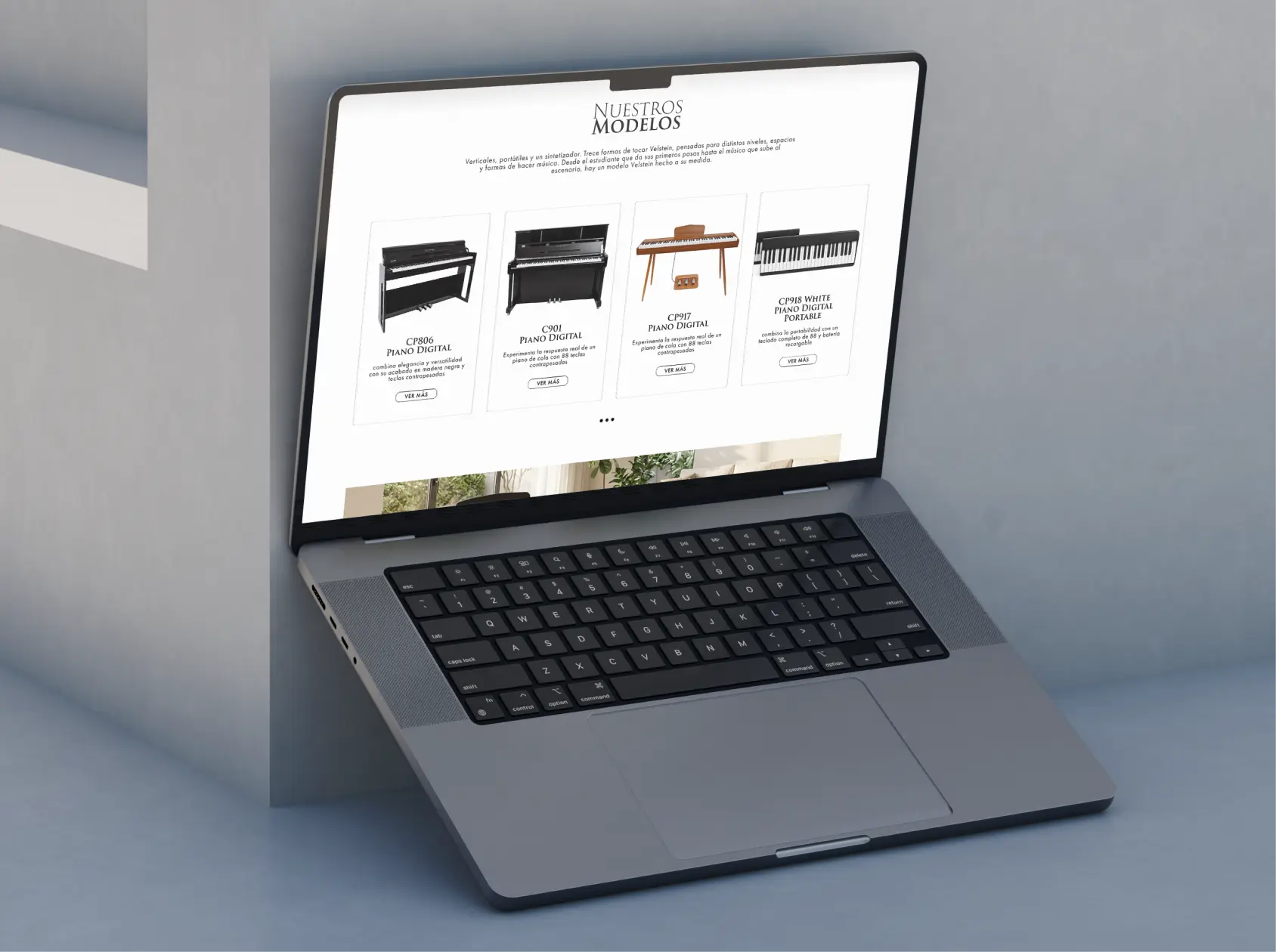
From catalog to point of sale. Each model has its own card with image, name and a key phrase to compare the full line. The journey ends at “Where to find them?”, with the official distributor and partner stores, because the real goal of the website is to get people to try the piano.